
Construction accidents in Houston often involve more than one responsible party. Depending on how the incident happened, liability may fall on your employer, a general contractor, a subcontractor, a premises owner, an equipment manufacturer, or a third-party driver in a work zone. Texas law treats these parties differently, especially when your employer carries workers’ compensation insurance as a subscriber or chooses to operate as a non-subscriber.
If your employer is a subscriber, the workers’ compensation system is usually your exclusive remedy against that employer under Labor Code section 408.001. When an employer is a non-subscriber, you may bring a negligence lawsuit, and Labor Code section 406.033 limits certain employer defenses. Most construction injury lawsuits must be filed within two years under Civil Practice and Remedies Code section 16.003, and your recovery can be reduced or barred if you are found more than 50 percent at fault under section 33.001. In rare cases involving gross negligence, exemplary damages may be available, subject to caps in section 41.008.
You need to understand how Texas law classifies construction accidents, which parties may be responsible, what deadlines apply, and how different claim paths work. Before evaluating liability and Texas-specific rules, it helps to understand what legally counts as a construction accident in Houston.
Call us today at 832-844-6700 for a free case evaluation with an experienced Houston work injury lawyer.
Table of Contents
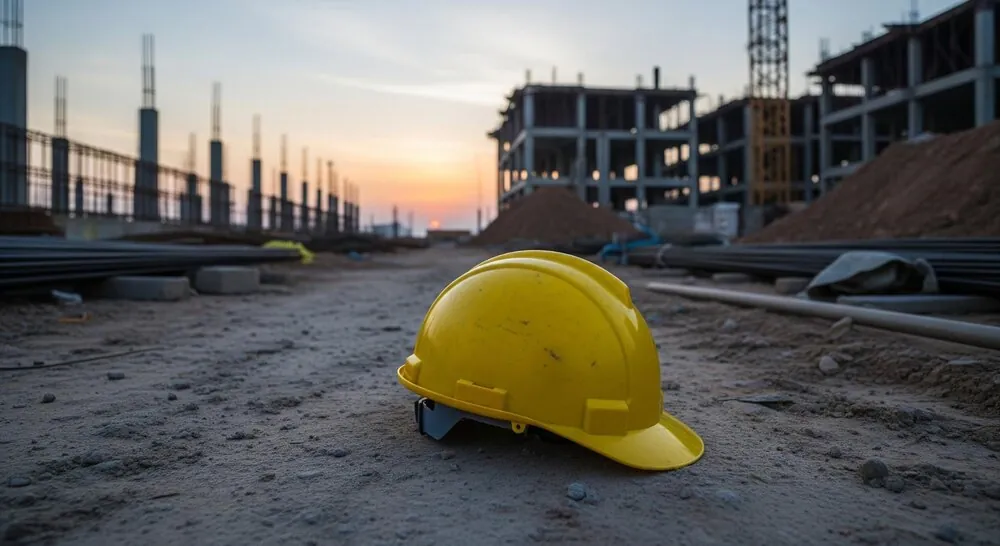
ToggleA construction accident in Houston generally includes any work-related or site-related incident that occurs in the course of construction, renovation, repair, demolition, or associated activities on a project. These incidents can involve workers employed by different companies, subcontractors, delivery drivers, inspectors, site visitors, and even bystanders in nearby areas or work zones.
From a safety perspective, OSHA identifies the Focus Four hazards on construction sites: falls, struck-by events, caught-in or between incidents, and electrocutions. These categories cover a wide range of events, including falls from scaffolds, ladders, or roofs, being struck by falling objects or moving equipment, being caught in machinery or between materials, and contact with energized electrical systems. Additional hazards come from cranes, scaffolding, trench and excavation work, power tools, heavy machinery, and defective or improperly maintained equipment.
In Houston, these hazards appear on high-rise projects in and around downtown, on large commercial and industrial builds, and on major road and bridge projects along I-10, I-45, I-69 and US-59, Loop 610, and Beltway 8. They also show up on refinery and ship-channel projects where construction intersects with industrial operations and heavy yard traffic.
Incidents that typically qualify as construction accidents include falls from heights, falls from scaffolds and ladders, and falls into unprotected openings. Struck-by events include being hit by dropped loads, falling tools, swinging crane loads, moving vehicles, or flying debris. Caught-in or between incidents involve crushing between equipment and fixed objects, entanglement in machinery, or trench and excavation collapses.
Construction accidents also include crane collapses and rigging failures, scaffold misassembly and collapse, trench cave-ins, and failures of shoring or sloping systems. Electrocutions and electrical injuries can result from contact with overhead power lines, energized circuits, or improper lockout and tagout procedures. Defective or poorly maintained equipment, including lifts, power tools, and personal protective equipment, can also contribute to construction accidents under Texas law.
Catastrophic construction injuries are those that cause permanent impairment, major loss of function, or significant disfigurement. Examples include amputations, traumatic brain injuries, spinal cord injuries with lasting mobility or neurological deficits, and severe burns. These injuries require extensive medical care, long-term rehabilitation, and often prevent you from returning to your prior work.
Because catastrophic injuries affect future medical needs and earning capacity, they drive higher damages and require more detailed analysis of life-care costs and long-term income loss than typical worksite injuries.
Construction workers may have claims through workers’ compensation, non-subscriber negligence suits, and third-party claims against other companies on the site. Visitors, delivery drivers, inspectors, and bystanders injured in or near construction zones generally pursue claims directly against the responsible companies or property owners. Each group has different legal options, but all may have potential claims when negligence causes harm.
Construction injury cases in Houston often involve layered contracts, multiple employers, and overlapping safety responsibilities. You may be dealing with a subscribing or non-subscribing employer, a general contractor that controls aspects of the work, several subcontractors, and manufacturers or suppliers of equipment. You need a team that understands how these relationships work under Texas law and how to navigate both workers’ compensation frameworks and civil negligence claims.
At Johnson Garcia, we bring over 35 years of experience to serious construction injury cases across Houston and Texas. We understand how Labor Code sections 408.001 and 406.033 affect claims against employers, how OSHA regulations and site safety manuals shape duties, and how to coordinate evidence when general contractors, subcontractors, property owners, and third-party drivers are all involved. Our focus is on building a clear, fact-based case that reflects your medical needs, time away from work, and long-term limitations.
When an employer does not carry workers’ compensation, we pursue negligence claims and navigate the barred defenses in Labor Code section 406.033, including limitations on arguments about assumption of risk and certain contributory negligence positions. We also know how to use OSHA findings, safety manuals, job safety analyses, and site-control documents to clarify which parties were responsible for planning and supervising work.
Crane collapses, scaffold failures, and work-zone collisions often lead to disputes over control, maintenance, and compliance with safety standards. We prepare these cases with litigation in mind and pursue suit when insurers do not offer fair resolutions, so that you have a path forward even when responsibility is contested.
Construction injuries in Houston reflect the OSHA Focus Four hazards and the high-energy environments of active worksites. Falls, struck-by events, caught-in or between incidents, and electrical contact can all produce serious harm. Many injuries involve multiple mechanisms, such as a fall caused by a scaffold failure combined with impact from falling materials.
Because projects range from downtown high-rises to highway and refinery expansions, the same hazard categories appear in different settings, but the resulting injuries often share common patterns.
Falls from scaffolds, ladders, roofs, or elevated platforms can cause fractures, head injuries, spinal injuries, and internal damage. Falling objects, including dropped tools, unsecured materials, and swinging crane loads, can strike workers on lower levels or ground crews, leading to concussions, lacerations, and crush injuries. Struck-by incidents also include being hit by moving vehicles, equipment, or loads during hoisting and rigging operations.
Caught-in or between injuries can occur when workers are compressed between vehicles and fixed objects, pinned by equipment, or entangled in moving machinery. Trench and excavation collapses can bury workers under soil or materials, causing suffocation, crush injuries, and internal trauma. These events are often tied to failures to follow excavation standards, including adequate shoring, shielding, or sloping.
Electrocution and electrical injuries arise when workers contact overhead lines, energized conductors, or equipment that has not been properly de-energized. Arc flash incidents and high-voltage contacts can cause severe burns, cardiac complications, and neurological damage. Failures in lockout and tagout procedures or inadequate identification of energized systems are common contributing factors.
High-energy construction incidents, including falls from height, equipment rollovers, and crush events, frequently cause traumatic brain injuries, spinal cord injuries, and amputations. These injuries often lead to permanent mobility limitations, chronic pain, and cognitive or neurological changes, and they may require long-term rehabilitation and assistive devices.
Construction accidents in Houston often follow familiar patterns tied to cranes and hoisting operations, scaffold and ladder use, trench and excavation work, electrical tasks, and work-zone traffic. Understanding how these incidents occur helps link specific safety failures to legal responsibility and clarifies which parties may be liable.
On high-rise and industrial projects, cranes and hoisting operations are common, as are scaffolds and aerial lifts. On road and bridge projects along I-10, I-45, I-69 and US-59, Loop 610, and Beltway 8, construction vehicles operate near live traffic, and work-zone crashes are a persistent risk. Ship Channel and industrial yard sites combine heavy equipment movement with complex logistics and confined spaces.
Crane and hoisting failures can involve rigging mistakes, overloaded equipment, inadequate inspections, or poor communication among crews. These issues can lead to dropped loads, tip-overs, or structural failures that injure workers on the ground or on elevated platforms.
Scaffold incidents can result from improper assembly, missing guardrails or planking, and lack of fall protection. Ladder and aerial lift accidents often involve unstable placement, improper use, or failure to tie off. Fall-protection violations are a frequent underlying cause of serious injuries in these settings.
Trench and excavation collapses may occur when shoring, shielding, or sloping requirements are ignored or applied inconsistently. Workers in or near unprotected trenches can be buried quickly, leaving little time to escape. Excavation hazards also include contact with underground utilities and unstable spoils piles near trench edges.
Electrical accidents on construction sites often occur when work is performed near energized lines or systems without adequate planning or de-energization. Failures in lockout and tagout procedures, mistaken assumptions that circuits are dead, or improper use of temporary power can all lead to shocks, burns, and arc flash incidents.
Johnson Garcia has helped Texans recover over 200 million after serious accidents—let us fight for you next.
Liability for a construction accident in Houston may be shared among several parties. The list can include your employer, a general contractor, one or more subcontractors, the premises owner, equipment or product manufacturers, and drivers or carriers operating in or near the worksite. Texas law treats each category differently, especially when workers’ compensation coverage is involved.
Understanding whether your employer is a subscriber or non-subscriber, who controlled the work, and who owned or provided equipment is essential for identifying all potential defendants and claim paths.
If your employer is a workers’ compensation subscriber, Labor Code section 408.001 generally makes workers’ compensation your exclusive remedy against that employer for work-related injuries, though claims may still exist against third parties. If your employer is a non-subscriber, you may pursue a negligence lawsuit, and Labor Code section 406.033 restricts certain employer defenses, including some arguments relating to assumption of risk and contributory negligence.
General contractors and subcontractors may be liable when they control the details of the work, safety procedures, or site conditions and fail to act reasonably. Premises owners may be responsible for dangerous conditions on the property or for failing to coordinate and monitor work that carries known hazards. In many cases, the allocation of control and responsibility among these entities is central to liability.
Manufacturers and suppliers of construction equipment, including scaffolds, lifts, cranes, tools, and personal protective equipment, may be liable when defective design, manufacturing, or warnings contribute to an accident. Product liability claims can proceed alongside negligence claims when equipment failure plays a role in the incident.
Under Civil Practice and Remedies Code section 33.001, your recovery can be reduced by your percentage of fault and barred entirely if your share exceeds 50 percent. In construction cases with multiple defendants and complex fact patterns, this rule shapes how fault is argued and how settlements and verdicts are structured.
Compensation after a construction injury in Houston includes economic and noneconomic damages and, in limited cases, exemplary damages. The structure depends on whether you are proceeding through workers’ compensation, a non-subscriber negligence case, third-party claims, or some combination of these paths.
Economic damages may include medical expenses, rehabilitation costs, lost wages, and loss of earning capacity. Noneconomic damages may address pain, suffering, and loss of enjoyment of life. Exemplary damages may be available when the legal standard for gross negligence is met, subject to statutory caps.
You may recover costs for emergency treatment, hospital stays, surgeries, medications, and ongoing medical visits. Serious injuries often require rehabilitation at facilities such as TIRR Memorial Hermann or other programs that help you regain function and adapt to long-term limitations. Some cases involve future care needs, including therapy, assistive devices, or in-home support.
Construction injuries can cause time away from work, reduced hours, or permanent job restrictions. You may have claims for wages lost while recovering and for loss of earning capacity if you cannot return to your prior role or earn at the same level. Vocational and economic evidence can help quantify these impacts over time.
Pain and suffering, mental anguish, and loss of enjoyment of life are often significant after a construction injury. These noneconomic damages address the impact of chronic pain, mobility limits, and other life changes. In rare situations involving gross negligence, exemplary damages may also be pursued under Chapter 41, subject to caps that limit the total amount.
Several Texas statutes shape construction injury claims, including rules on limitations, workers’ compensation exclusivity, non-subscriber suits, comparative fault, and punitive damage caps. Understanding these laws helps you avoid missed deadlines and unrealistic expectations about recovery.
Key provisions include Civil Practice and Remedies Code section 16.003 on limitations, Labor Code sections 408.001 and 406.033 on employer remedies and non-subscriber suits, section 33.001 on the 51 percent bar rule, and section 41.008 on caps for exemplary damages.
In most construction injury cases, you have two years from the date of the incident to file a lawsuit under Civil Practice and Remedies Code section 16.003. Missing this deadline can prevent you from pursuing your claim in court.
When your employer is a workers’ compensation subscriber, workers’ compensation is generally your exclusive remedy against that employer for work injuries under Labor Code section 408.001. When your employer is a non-subscriber, you may bring a negligence suit, and Labor Code section 406.033 restricts certain defenses and changes how fault arguments are presented.
Texas comparative fault rules in section 33.001 reduce your recovery in proportion to your share of responsibility and bar recovery if you are found more than 50 percent at fault. In construction settings with multiple workers and companies, this rule influences how evidence is gathered and how fault is allocated among all involved.
Exemplary damages intended to punish and deter certain wrongful conduct are governed by Chapter 41 of the Civil Practice and Remedies Code. Section 41.008 limits these awards through statutory caps that depend on the amount of economic and noneconomic damages awarded. These caps must be considered when evaluating cases that may involve gross negligence.
After a jobsite injury in Houston, you are likely focused on immediate medical care, but there are also practical steps you can take to preserve information and comply with reporting requirements. You do not need to resolve legal questions right away, but early attention to documentation can help later.
Your priorities should be appropriate medical treatment, accurate incident reporting, and careful handling of any documents or communications related to the injury.
You should seek prompt medical care, whether through emergency services or follow-up visits, and report all symptoms to providers so that your records reflect the full extent of your injuries. Many serious injuries are treated first at Red Duke Trauma Institute at Memorial Hermann–TMC or at Ben Taub Hospital. You should report the incident according to your employer’s procedures and ensure that any internal incident reports are accurate and complete.
If your employer is a non-subscriber, you may also receive information related to reporting claims outside the workers’ compensation system. Regardless of employer status, preserving photographs of the scene, equipment, and visible injuries, as well as the names of witnesses and supervisors, helps create a record of what occurred.
You should be cautious about signing broad forms, releases, or settlement documents without understanding their effect. Avoid minimizing your symptoms when speaking with supervisors, safety personnel, or insurance representatives. It is generally better to provide factual information about what happened and your injuries, while avoiding speculation about fault or accepting blame without a full investigation.
High-value construction injury cases require a structured approach to investigation, documentation, and damages analysis. At Johnson Garcia, we work to understand how the incident occurred, which parties controlled the work and the premises, and how the injury affects your long-term health and livelihood.
We gather evidence from multiple sources, including regulatory records, safety documents, photographs, videos, and electronic data, and we work with experts to explain technical issues in clear terms. Our goal is to present a case that reflects both the safety failures that led to the injury and the full scope of your losses.
We often review OSHA inspection files, citations, and logs, as well as company safety manuals, job safety analyses, and site-specific plans and drawings. These materials can show what hazards were known, what procedures were required, and whether they were followed. Site-specific records, including toolbox talks, training files, and incident reports, can also help establish responsibilities and failures.
Photographs and videos from the scene, whether taken by workers, bystanders, or site cameras, are valuable for reconstructing how an incident occurred. In work-zone vehicle crashes, electronic data recorders and telematics systems can provide information on speed, braking, and other driver actions just before impact, which helps clarify responsibility.
We work with engineers, safety professionals, and OSHA-experienced experts to analyze equipment failures, scaffolding and crane configurations, excavation practices, and electrical systems. Medical experts, life-care planners, and economists help us assess long-term medical needs and loss of earning capacity. Together, these professionals contribute to a comprehensive understanding of both liability and damages.
We present your claim to insurers and responsible parties with supporting evidence and statutory analysis. When fair resolution is possible through negotiation, we work to reach it. When offers do not reflect the strength of the case or the seriousness of your injuries, we are prepared to file suit and prepare for trial, including depositions, motions, and presentation of expert testimony.
Serious construction injuries in Houston often require advanced emergency care followed by rehabilitation and long-term support. Knowing the types of facilities and resources that may be involved can help you and your family plan for treatment and recovery.
Houston’s medical network includes Level I trauma centers for immediate care, rehabilitation hospitals for complex recovery, and community organizations that provide additional support to injured workers and their families.
Memorial Hermann–Texas Medical Center’s Red Duke Trauma Institute is a Level I trauma center that provides comprehensive emergency care, surgery, and critical care for severely injured patients. Ben Taub Hospital also operates as a Level I trauma center, treating serious injuries from construction incidents, vehicle crashes, and other emergencies.
TIRR Memorial Hermann offers rehabilitation for people with brain, spinal cord, and other serious injuries. Programs focus on maximizing independence, improving function, and helping patients adapt to lasting physical or cognitive changes that often follow major construction accidents.
Community and support organizations in the Houston area can provide counseling, peer support, and practical assistance, including transportation and caregiver resources. Hospital social workers and case managers can help connect you and your family with programs that match your needs during and after recovery.
Responsibility may fall on your employer, a general contractor, subcontractors, premises owners, equipment manufacturers, or third-party drivers in work zones. Liability depends on who controlled the work, the site, and the equipment, and whether they acted reasonably under the circumstances.
If your employer is a non-subscriber, you may typically bring a negligence lawsuit. Labor Code section 406.033 limits certain defenses, which changes how fault is argued. Subscriber employers are usually protected by workers’ compensation exclusive remedy rules.
Liability for scaffold collapses may involve employers, general contractors, subcontractors, or equipment suppliers, depending on who erected, inspected, or controlled the scaffold and whether there were design, assembly, or maintenance failures. Product manufacturers may also be responsible in defective-equipment cases.
Work-zone crashes often involve both construction vehicles and passing traffic. Drivers, employers, contractors, and agencies responsible for traffic control may all be evaluated. HPD reports and TxDOT crash records are important for understanding how the collision occurred.
Exemplary damages may be available in rare cases involving gross negligence or certain wrongful acts, subject to caps in Chapter 41. Most construction cases focus on compensatory damages for medical costs, lost income, and pain and suffering.
Yes. Visitors, inspectors, delivery drivers, and bystanders injured by construction activities or site conditions may pursue claims against responsible companies or property owners, even if they are not employees on the project.
Texas comparative fault rules reduce recovery by your percentage of responsibility and bar recovery if your share exceeds 50 percent. Careful investigation is important to address fault arguments and protect your ability to recover damages.
In many cases, you have two years from the date of the incident to file under Civil Practice and Remedies Code section 16.003. Missing this deadline can prevent you from bringing your claim in court.
You should preserve medical records, incident reports, photographs of the scene and equipment, names of witnesses, and any communication with employers or insurers. These materials help reconstruct what happened and document your injuries.
We typically handle construction injury cases on a contingency fee basis. You generally do not pay attorney’s fees unless we recover compensation for you. We explain the fee structure and any potential costs during your consultation.
A serious construction accident in Houston can leave you dealing with medical treatment, missed work, and uncertainty about which company should be held accountable. Employer status, multiple contractors, and complex safety rules can make it difficult to understand your rights and options. You do not have to work through those questions alone.
At Johnson Garcia, we draw on over 35 years of experience handling construction and industrial injury cases throughout Houston and across Texas. We know how to evaluate employer status, analyze site-control issues, and work with safety and medical experts to present a well-supported claim. We offer free consultations, and we typically handle these cases on a contingency fee basis, so you do not pay attorney’s fees unless we recover compensation for you.
If you or a loved one has been injured in a construction accident on a Houston project, you can contact us today to discuss your situation, preserve important evidence, and take the next steps toward pursuing the compensation you need to move forward.
START YOUR JOURNEY TOWARDS JUSTICE
START YOUR JOURNEY TOWARDS JUSTICE
 CALL NOW